
![[Photo] A view of chrysanthemums on display at the Chrysanthemum Exhibition. Red, yellow and white chrysanthemums are in bloom.](/national-garden/shinjukugyoen/highlights/kiku/images/heading_sp.jpg)
Chrysanthemums and the Chrysanthemum Exhibition
- Top
- Highlights
- Chrysanthemums and the Chrysanthemum Exhibition
Chrysanthemum Exhibition
![[Photo] A view of the chrysanthemum exhibition during the day. Colorful, multi-flowered chrysanthemums are on display.](/national-garden/shinjukugyoen/highlights/kiku/images/img_01.jpg)
The Shinjuku Gyoen Chrysanthemum Exhibition, rooted in imperial tradition, is held each year in the Japanese Traditional Garden from November 1 to 15. During the exhibition, temporary wooden pavilions called uwaya are built along the walking paths of the Japanese Garden. Inside, a remarkable assortment of chrysanthemum blossoms are displayed in a variety of unique styles. The chrysanthemum beds are arranged so visitors can fully enjoy their beauty while following the viewing path.
During the exhibition, the Information Center hosts the “Chrysanthemum Panel Exhibition,” which provides clear and engaging explanations of the Chrysanthemum Exhibition's highlights.
Pamphlet
Chrysanthemum Bed Locations and Viewing Route
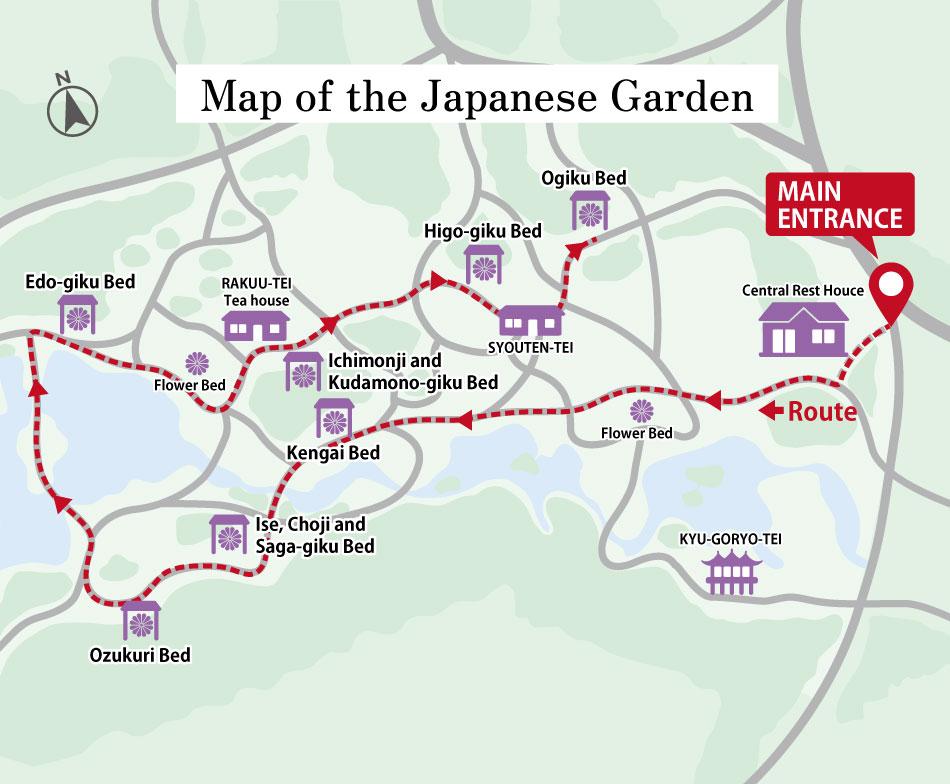
The History of the Chrysanthemum Exhibition at Shinjuku Gyoen
In 1878, the Ministry of the Imperial Household held the first chrysanthemum exhibition for the Imperial Family at the Akasaka Palace, which was then a temporary imperial residence. In 1880, the exhibition evolved into an event to promote international goodwill, with invitations also extended to foreign envoys. Chrysanthemums for the display were initially cultivated at the Maruyama chrysanthemum cultivation site on the Akasaka Palace grounds. In 1904, cultivation of some chrysanthemums began at Shinjuku Gyoen, which was then an imperial botanical garden. By 1925, all chrysanthemums for the exhibition were cultivated at Shinjuku Gyoen, and the exhibition venue was moved to Shinjuku Gyoen in 1929. Due to natural disasters and during the wartime hiatus, the exhibition was suspended from 1937 to 1948. However, since 1949 when Shinjuku Gyoen reopened as a national garden, the imperial tradition has been carried on with chrysanthemums exhibited to the public every year.
During the Taisho and Showa eras that spanned much of the 20th century, when the exhibition's scale, chrysanthemum-growing techniques, and chrysanthemum designs reached their height, Shinjuku Gyoen became well known domestically and internationally as an imperial garden.
![[Photo]A "Kengai" (Cascading Style) display at the Chrysanthemum Exhibition. This style mimics the way wild chrysanthemums grow in nature, hanging gracefully from the crevices of steep, rocky cliffs.](/national-garden/shinjukugyoen/highlights/kiku/images/img_03.jpg)
Chrysanthemum Displays
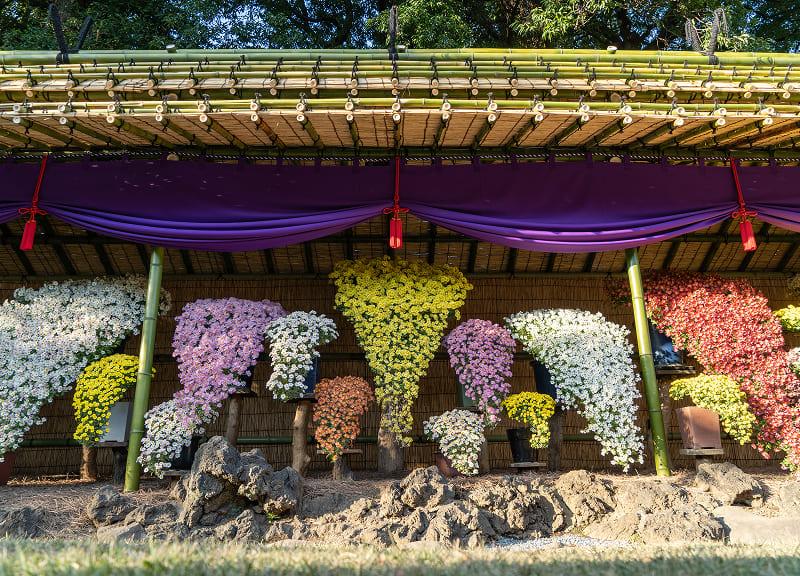
Kengai bed
The blossoms appear to tumble in a cascade, like wild mums growing in tufts on a rocky cliff. The bed at Shinjuku Gyoen showcases elegant and small single-petaled chrysanthemums. A single plant is pinched, staked, and trained onto a bamboo-and-wire frame to create the cascading form. The uwaya is constructed from bamboo and reed screens, and a stream of water flows in front of it.
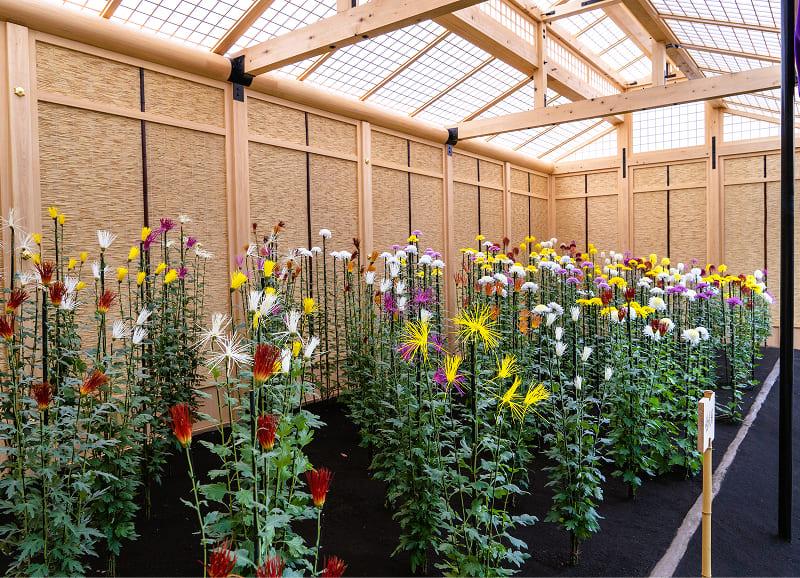
Ise, Choji, and Saga-giku bed
Chrysanthemum varieties that developed to have colors and shapes unique to their regions of origin are collectively known as koten-giku (classical chrysanthemums). This bed displays three such varieties simultaneously. The Ise variety, developed in the Ise region of Mie Prefecture, has crinkled and dropping petals and a mop-like countenance. Choji has anemone-like flowers. The Saga variety, which has spidery and straight petals that spray upward and out, developed in the Saga region of Kyoto Prefecture. The uwaya is constructed from wood and has a double-layered roof.
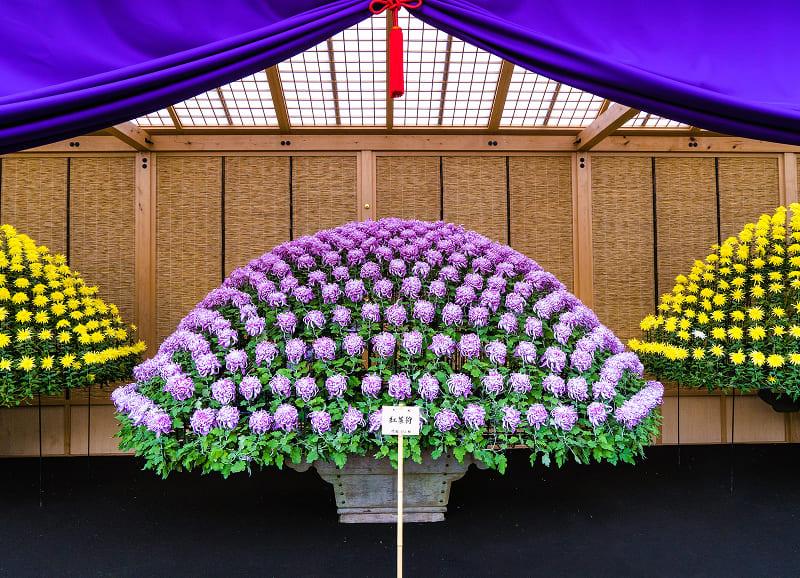
Ozukuri bed
Using a unique growing technique developed at Shinjuku Gyoen, a single root grows numerous branches for a year or more without grafting, and hundreds of flowers are trained into one magnificent dome. It requires advanced skills to have numerous chrysanthemums bloom simultaneously in a uniform shape, making this bed one of the finest on display. The uwaya is constructed from wood, and its size is impressive.
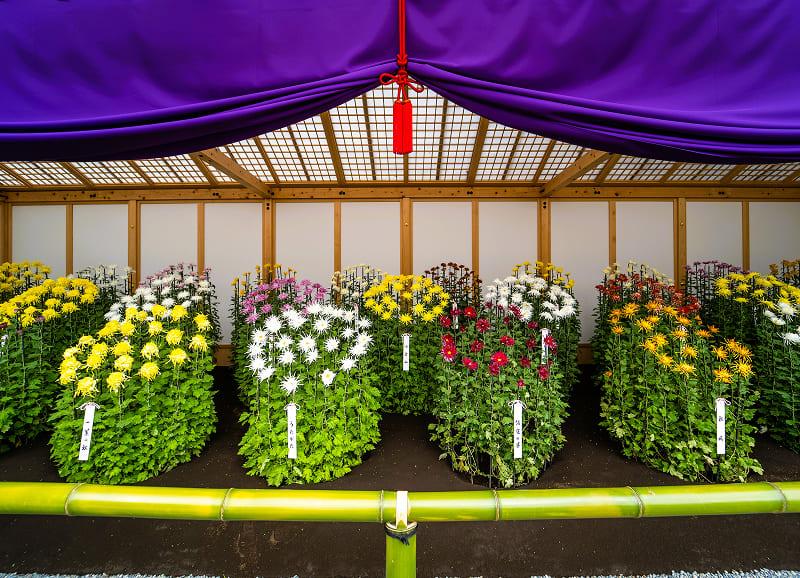
Edo-giku bed
This classical chrysanthemum developed in Edo (present-day Tokyo) during the 17th to 19th centuries. Viewers can enjoy watching the petals and colors transform in various ways after the flower blossoms. They are also called Mai-giku (dancing chrysanthemums) for its many forms. The changes in the flower shape vary depending on the variety. The uwaya is constructed from wood and faces south to allow sunlight to promote flowering during the exhibition.
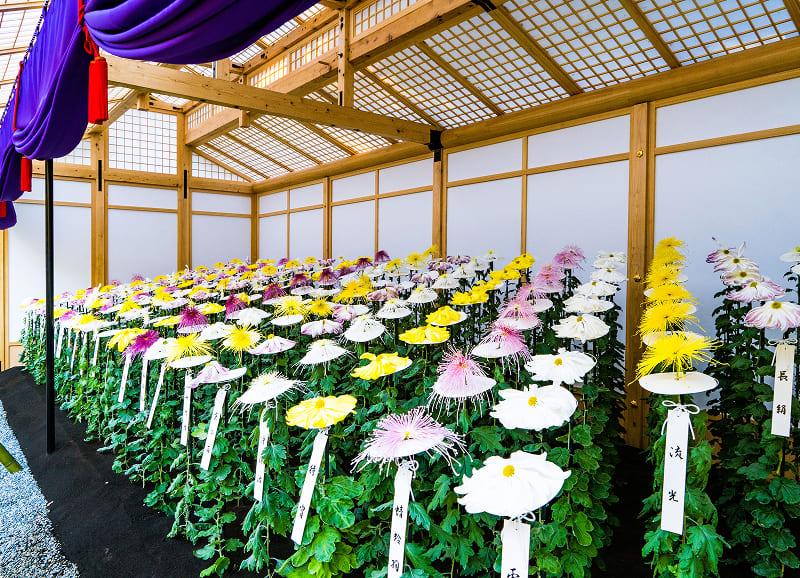
Ichimonji and Kudamono-giku bed
Ichimonji is a single-petaled, large-flowered variety with around 16 petals and is also called Gomonsho-giku as the shape of the flower resembles the Imperial crest. The Kudamono variety has thin and straight tubular petals. A total of 194 plants of 26 varieties are planted in this bed. The uwaya is constructed from wood and has a double-layered roof.
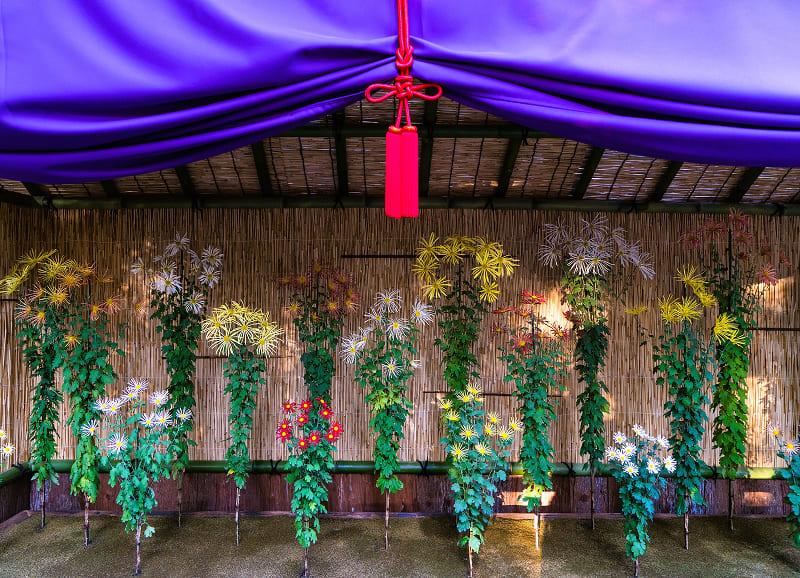
Higo-giku bed
This classical chrysanthemum originated in Higo (present-day Kumamoto Prefecture), where samurai cultivated this variety as part of their spiritual training. It is characterized by single-petaled flowers with flat and tubular petals. The uwaya is constructed from bamboo and reed screens. While this is the smallest bed on display, meticulous attention is still paid to detail, with little touches such as having a layer of moss cover the black soil for an attractive finish.
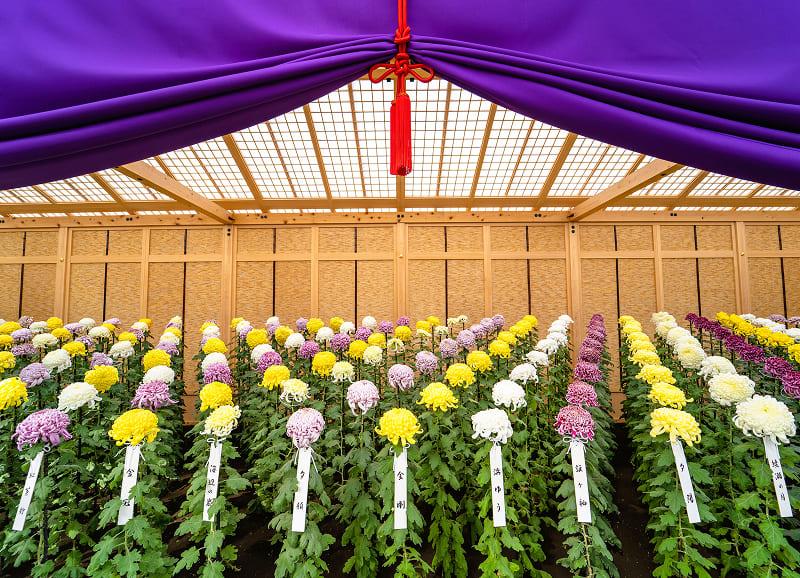
Ogiku bed
This popular garden chrysanthemum is characterized by incurved petals forming a puffy, scaly flower. A total of 311 plants in 39 cultivars are arranged in diagonal lines of yellow, white, and pink. This arrangement style unique to Shinjuku Gyoen is known as tazuna-ue (“horse bridle”) inspired by the pattern of the reins of a sacred horse. All the flowers open in unison for a spectacular display. The uwaya has a simple roof shape, designed to accommodate the voluminous blossoms.