

Introduction
- Top
- Introduction
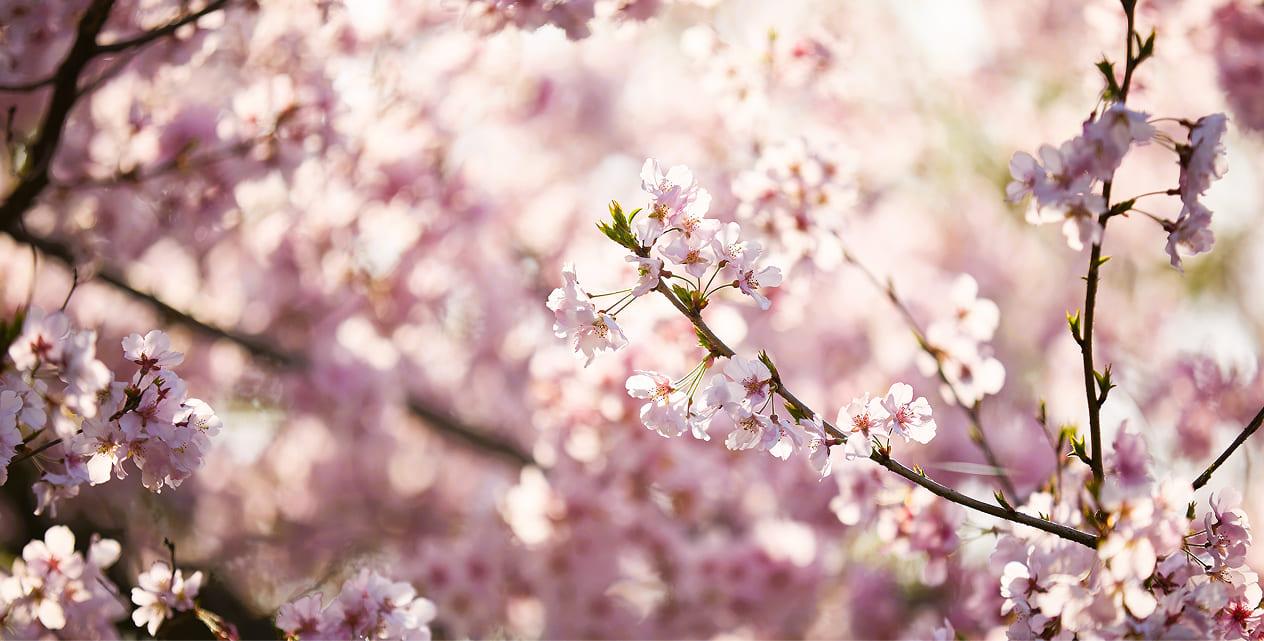
With seasonal delights and a wide variety of trees and plants to enjoy throughout the year, including cherry blossoms in spring and chrysanthemum displays and vibrant colors each fall, Shinjuku Gyoen has been a favored oasis of green for people for a long time.
![[Photo] Exterior view of the Kyu-Goryo-Tei (Taiwan Pavilion) in the Japanese garden.](/national-garden/shinjukugyoen/intro/images/history.jpg)
It is said that the history of Shinjuku Gyoen began in the Edo Period with a daimyo residence granted to Naito Kiyonari, a vassal of Shogun Tokugawa Ieyasu. This section provides an overview of the history of Shinjuku Gyoen as it developed in its present form.
![[Photo] The view of the Japanese garden from the Kyu-Gokyu-Sho (Old Imperial Rest House).](/national-garden/shinjukugyoen/intro/images/garden.jpg)
Shinjuku Gyoen has four distinct gardens: the symmetrical Formal Garden in the east; the Landscape Garden in the center, its spacious lawn dotted with magnificent trees; the Japanese Traditional Garden in the west, a picturesque landscape designed for strolling; and the Tamamo Pond area in the northeast close to the Okido Gate, part of the former Naito estate garden in the Edo Period.
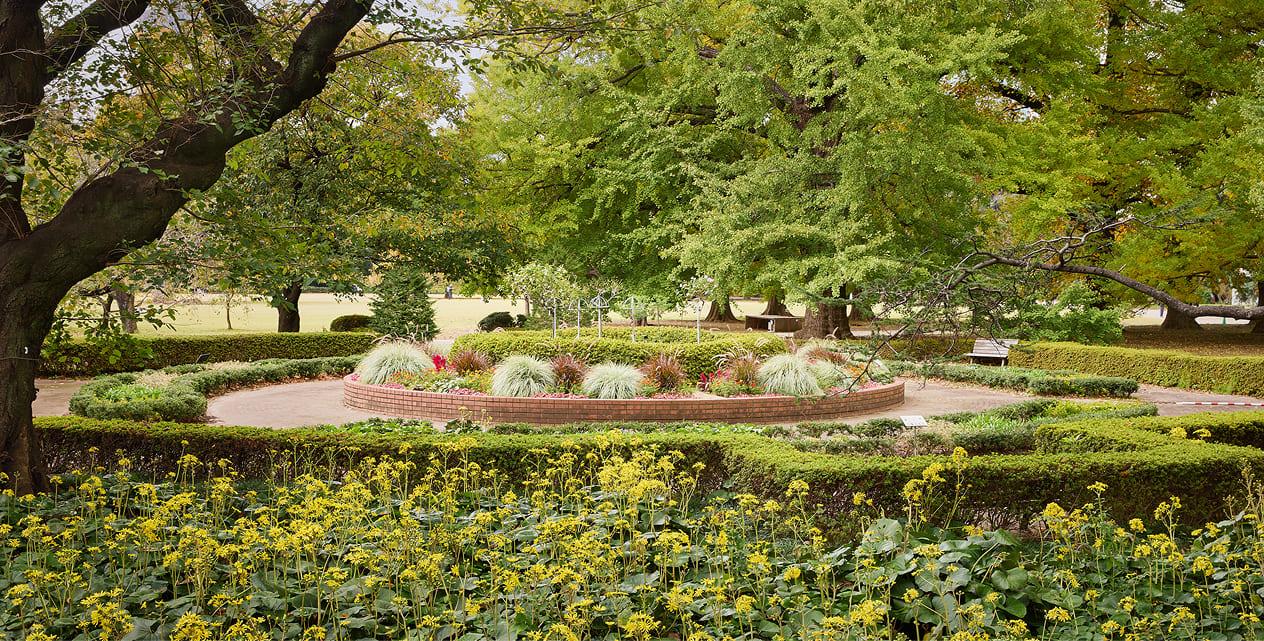
We work to cultivate healthy trees at Shinjuku Gyoen with the goal of ensuring safety, eliminating outbreaks of disease or pests, preventing accidents, ensuring Vista Lines, and improving landscapes.
![[Photo] Interior of the Kyu-Gokyu-Sho (Old Imperial Rest House) near the greenhouse.](/national-garden/shinjukugyoen/intro/images/rest.jpg)
Two buildings within the gardens at Shinjuku Gyoen survived the firebombings of World War II: the Kyu-Gokyu-Sho (Old Imperial Rest House) that was used as a resting place by the Emperor and Imperial family, and the Kyu-Goryo-Tei that was completed in 1927 to commemorate the wedding of Crown Prince Hirohito (later Emperor Showa) and was funded by contributions from Japanese residents of Taiwan. Other historic structures dot the garden grounds, including the Main Gate, the former gatekeepers house at the Shinjuku and Okido Gate, and the imitation wooden bridge near Maple Hill.
![[Photo] Jacob’s ladder (Polemonium kiushianum), an endangered perennial that is cultivated and preserved at Shinjuku Gyoen.](/national-garden/shinjukugyoen/intro/images/plant.jpg)
Shinjuku Gyoen is working for the conservation of endangered plants outside their natural habitats, including the cultivation of endangered plants and the preservation of their seeds.