

Historical
Buildings
- Top
- Introduction
- Historical Buildings
1896-
-
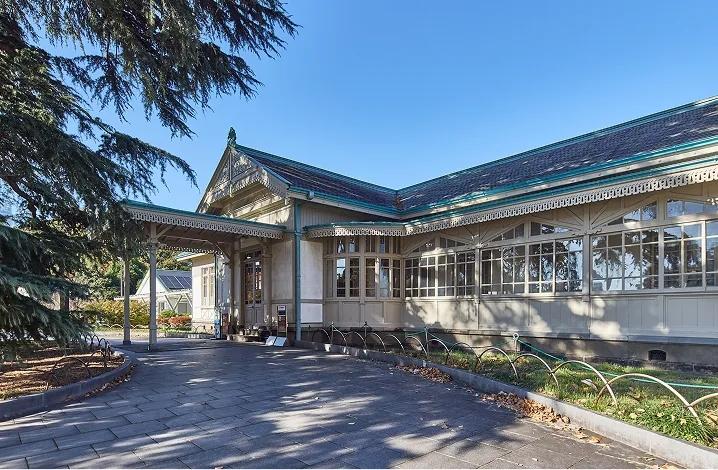
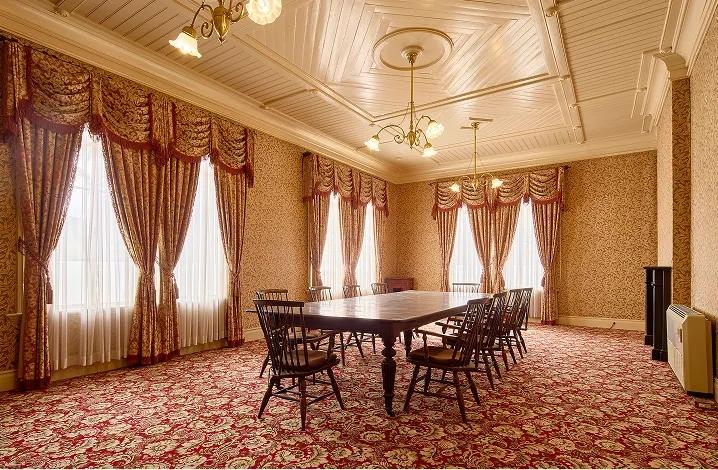
Kyu-Gokyu-Sho (Old Imperial Rest House)
Kyu-Gokyu-Sho (Old Imperial Rest House) is an elegant single-story wooden structure whose roof features a deep green-blue trim. It was originally constructed in 1896 as a building attached to the former greenhouse and was used as a rest house by members of the imperial family on their visits to see the greenhouse. During the latter half of the Taisho era (1912–1926), a golf course and tennis courts were constructed at Shinjuku Gyoen, and Kyu-Gokyu-Sho was used as a clubhouse by members of the imperial family. It miraculously withstood the 1945 air raids unscathed, and was later used as administration offices for Shinjuku Gyoen until 1994. After restoration was completed, it was designated an Important Cultural Property in 2001.
Link to Kyu-Gokyu-Sho Pamphlet
1905-
-
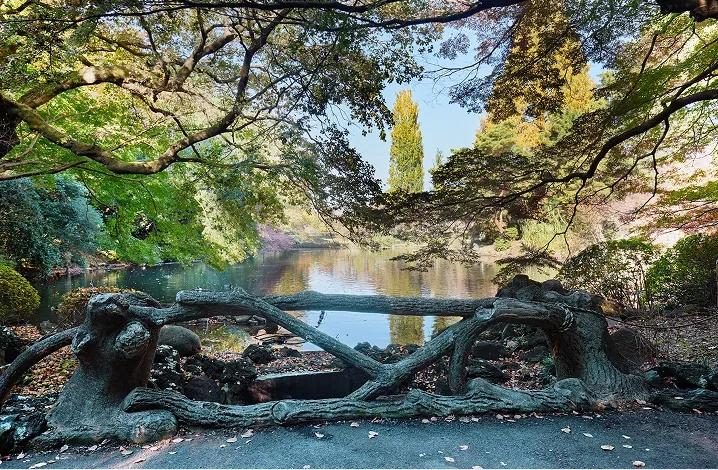
Imitation Wooden Bridge
This bridge is located near Lower Pond and Maple Hill. The bridge balustrades that appear to be old, gnarled wood are in fact fashioned of textured concrete. Exhibited at the 1900 Paris Exposition and installed in Shinjuku Gyoen in 1905, this is said to be the first imitation wooden bridge in Japan.
-
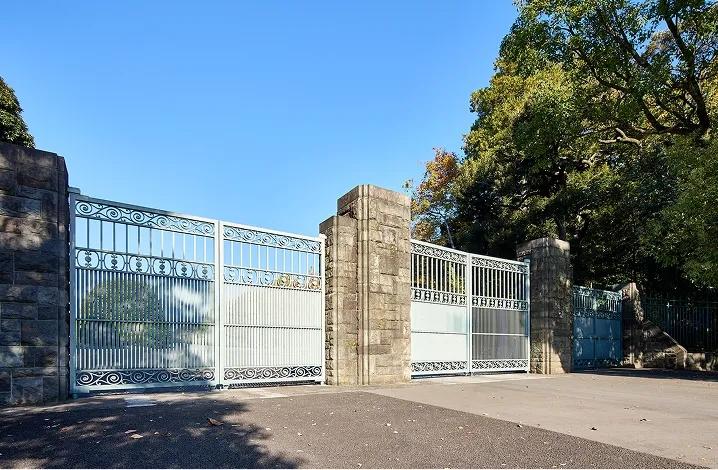
Main Gate
The Main Gate is located at the eastern edge of Shinjuku Gyoen facing Gaiennishi-dori. It was built as an entrance to the garden for the Imperial Family and distinguished guests from Japan and overseas back when Shinjuku Gyoen was an imperial garden. Now a national garden, Shinjuku Gyoen is open to the general public; for this reason, it was necessary to provide entrances and exits at convenient locations around the garden. Accordingly, three entrance gates were built at Shinjuku, Okido, and Sendagaya, while the Main Gate was closed and is no longer in use.
1927-
-
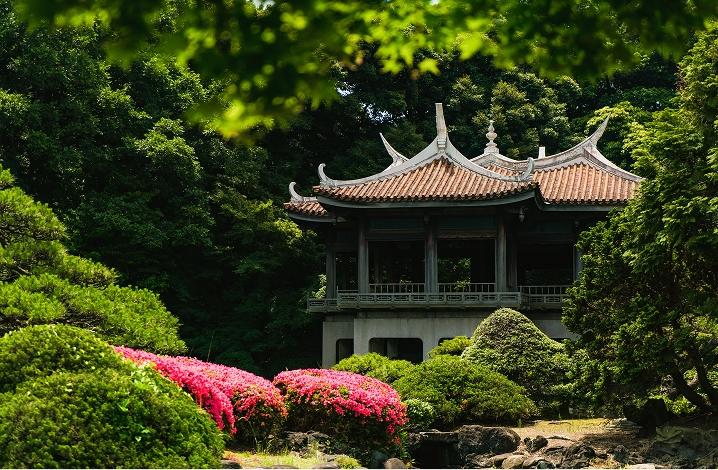
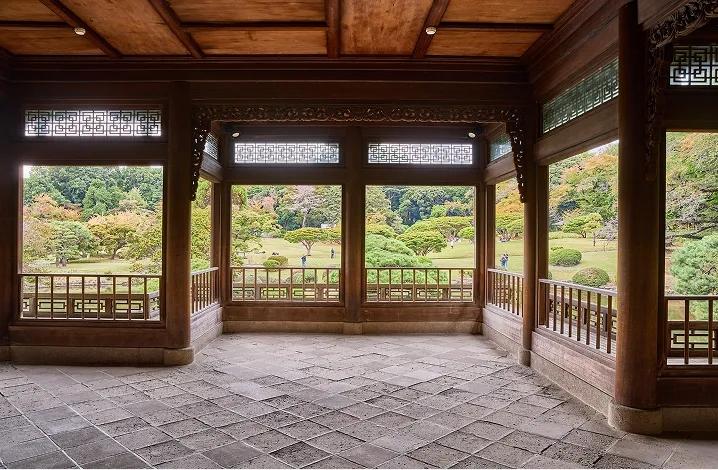
Kyu-Goryo-Tei
While strolling through the Japanese Traditional Garden, one’s gaze is drawn to a reddish roof with white “swallowtail” peaks that taper gracefully upwards. This is the Kyu-Goryo-Tei, built in 1927 to commemorate the wedding of Crown Prince Hirohito (later Emperor Showa) and funded by Japanese residents of Taiwan after his 1923 visit to the island.
The building was constructed in the Binnan style of architecture common in Taiwan after the early nineteenth century. Note the dark warmth of the Taiwanese cypress and cedar in the ceiling and pillars, the round window carved in the shape of Chinese characters with a proverb of praise for the Emperor, and the panoramic view of the garden across the pond beautifully framed by the pillars.
Link to Kyu-Goryo-Tei Pamphlet -
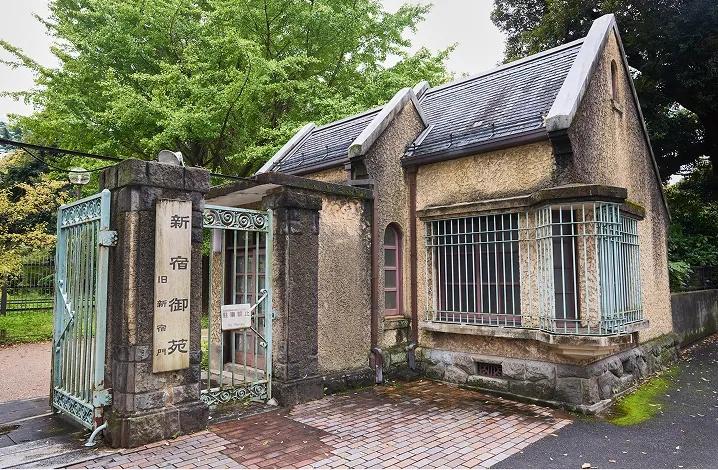
Former Gatekeeper House at the Shinjuku Gate 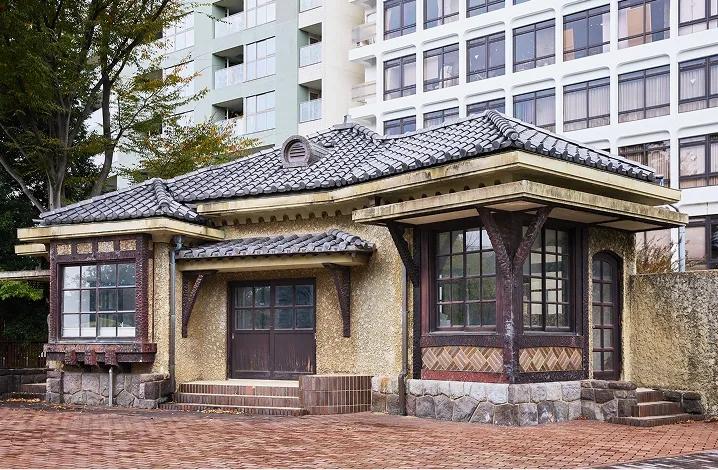
Former Gatekeeper House at the Okido Gate Former Gatekeeper Houses at the Shinjuku and Okido Gates
The gatekeeper houses at the Shinjuku and Okido Gates were built in 1927. They were designed for harmony with the natural surroundings and exhibit an eclectic blend of Western and Japanese architectural styles. They are appreciated for their unique designs reflecting the time when they were built and for the historical and aesthetic value they bring to the garden.
1987-
-
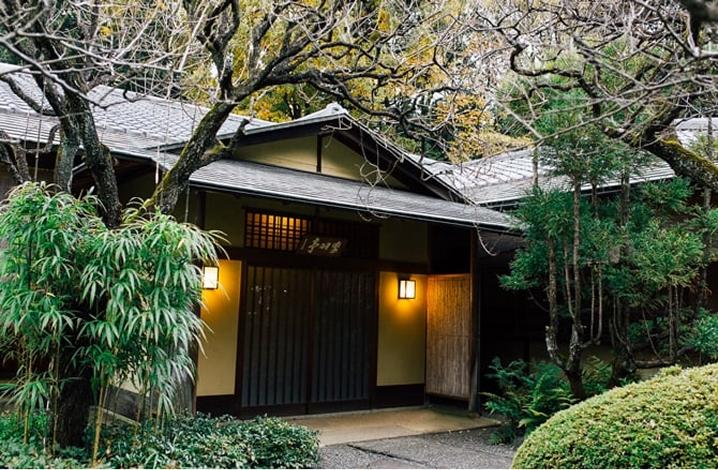
Rakuu-Tei
The former iteration of Rakuu-Tei was built in 1881 as a rest house for members of the Imperial Family when they hunted at the duck habitat. Rakuu-Tei is a tea house that was constructed in a plum grove of the Japanese Traditional Garden in 1987.
-
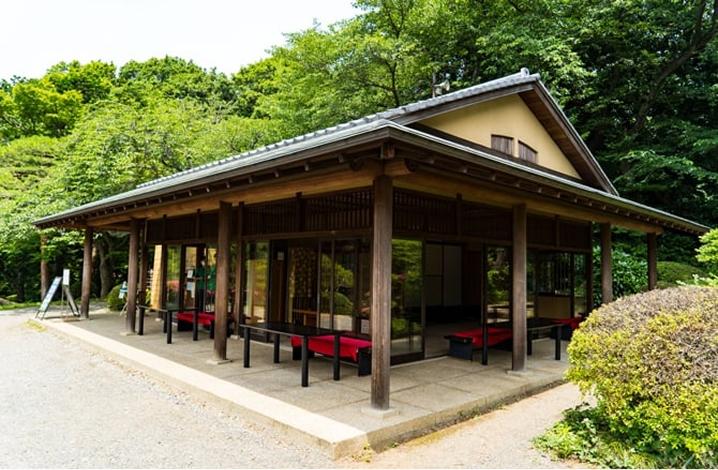
Shouten-Tei
Located in the Japanese Traditional Garden, Shouten-Tei was constructed at the same time as Shinjuku Gyoen in 1906. It has been rebuilt several times since, and the current building was completed in 1991.