
History
- Top
- Introduction
- History
1590-1871
Feudal Estate
The Edo Residence of the Naito Family
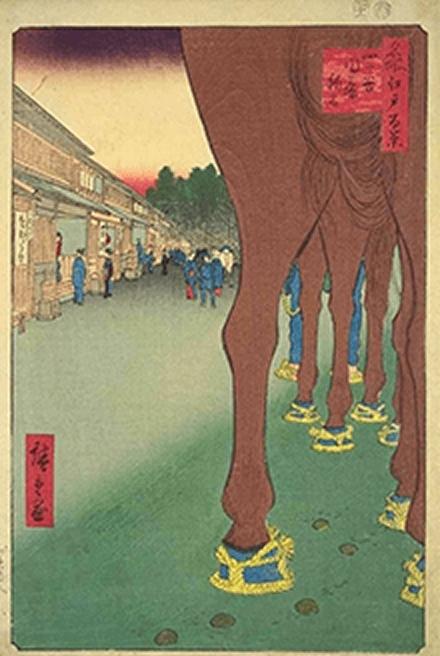
The history of Shinjuku Gyoen dates back to 1590, when Tokugawa Ieyasu, who established the Edo shogunate, moved to Edo (present-day Tokyo) and granted land in the Shinjuku area to his vassal, Kiyonari Naito. It is a rather interesting story: from the present site of Shinjuku Gyoen, Tokugawa Ieyasu ordered Kiyonari to ride a horse as far as possible until the animal could run no more. Kiyonari was given the vast land, extending in the east to Yotsuya, the west to Yoyogi, the south to Sendagaya, and the north to Okubo.
About 100 years later, Naito Kiyokazu, the seventh-generation head of the Naito family, became the feudal lord of the Shinshu Takato Domain (present-day Nagano). He was granted a primary residence in Kanda Ogawamachi and established his suburban residence in the Yotsuya area. Later, the Edo shogunate reclaimed part of the land to develop a new post town and relay station on the Koshu Kaido road, which came to be called Naito Shinjuku. Like most Edo secondary residences, the Naito family suburban residence had a garden. It was used as the retirement dwelling of the previous head of the family and as a retreat for the feudal lord. Completed in 1772 using surplus water from the Tamagawa Aqueduct, the garden, called “Tamagawa-en,” was opened to the public in each of the four seasons.
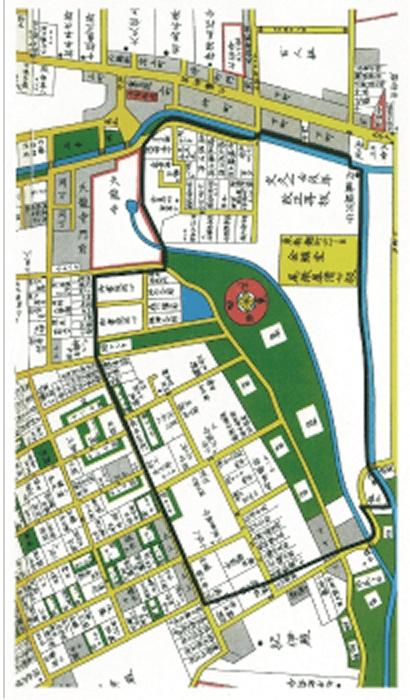
* The area surrounded by the black line would eventually become Shinjuku Gyoen.
1872-1905
From the birth of the Naito Shinjuku Experimental Station, the center of horticultural science, to the completion of the Shinjuku Gyoen
Following the 1868 Meiji Restoration, the Ministry of Finance purchased the Naito Shinjuku residence and surrounding lands. In 1872, the Meiji government established the Naito Shinjuku Experimental Station on a site totaling 58.3 hectares to promote and improve modern agriculture in Japan. Adapting many Western techniques, the garden cultivated around 3,000 types of fruits and vegetables, and conducted wide-ranging research into areas such as silkworm cultivation and cattle breeding. Further programs for agricultural advancements continued, including the establishment of the Agriculture Training Institute in 1874. (This later became the Komaba Agricultural School that was the predecessor of the Faculty of Agriculture at Tokyo University.)
After the operations of the Naito Shinjuku Experimental Station were transferred to the Mita Institute of Breeding Plants and the Komaba Agricultural School, in 1879, the Shinjuku lands were donated to the Imperial Household and were controlled by the Ministry of the Imperial Household. The property was renamed the Imperial Botanical Garden. During the period of the Imperial Botanical Garden, in addition to the fruit orchards and silk mill that were taken over from the Naito Shinjuku Experimental Station, a duck habitat, zoo (granted to the Ueno Zoological Gardens in 1926), and other new facilities were created, and the land served as an imperial estate and hunting grounds. The name was then changed to Shinjuku Goryochi (imperial estate) in 1886, and the small-scale horticulture field on the garden grounds became designated as the Shinjuku Imperial Botanical Garden, with a focus on horticulture studies. In 1892, the first full-scale heated greenhouse in Japan was constructed, and became an important defining facility of horticulture work at the Shinjuku Imperial Botanical Garden. The Old Imperial Rest House was constructed in 1896 to serve as a resting place for the emperor and imperial family when they came to view the plants at the Shinjuku Imperial Botanical Garden greenhouse.
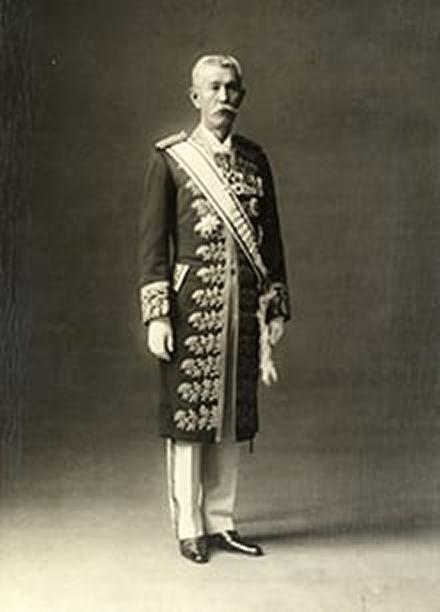
Fukuba Hayato was an important figure who played a key role in turning the Shinjuku Imperial Botanical Garden into a garden which is the basis of the present Shinjuku Gyoen. In 1877, Fukuba Hayato became an agricultural student at the Naito Shinjuku Experimental Station, and he studied in France and Germany for three years beginning in 1886. After his return, he worked to recreate a Western-style heated greenhouse with temperature control. This greenhouse was used to cultivate not only Western fruits and vegetables, but also tropical and sub-tropical plants. Some of his achievements in fruit cultivation include the production of the Fukuba Strawberry, Japan’s first strawberry, as well as an ancestor of the modern muskmelon and a grape variety known as Muscat of Alexandria.
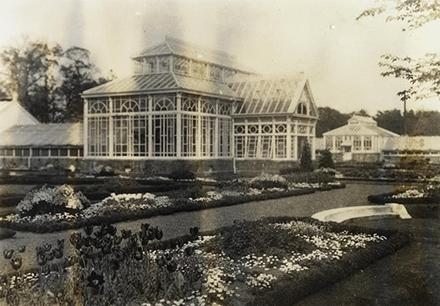
In 1898, Fukuba Hayato became head of the Shinjuku Imperial Botanical Gardens. During a visit to France in 1900, following the highly acclaimed exhibition of three large chrysanthemum displays at the Paris Exposition, Fukuba asked Henri Martinet, a professor at the Versailles horticultural school, to prepare a new garden scheme for renovating the Shinjuku Imperial Botanical Gardens to create a Western-style garden. The garden underwent large-scale renovations over five years from 1902 to 1906. Upon its completion, it became the basis of the Shinjuku Gyoen layout today.
1906-1949
Shinjuku Gyoen as an Imperial Garden
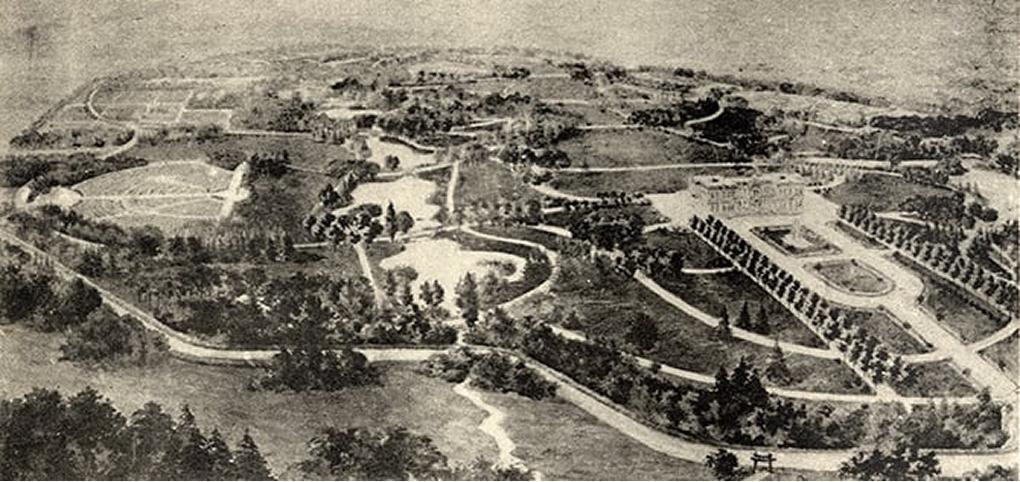
Shinjuku Gyoen, which had been created based on the Martinet design in 1906, was the site of a variety of imperial family events during its time as an imperial garden. The imperial family’s cherry-blossom viewing event was relocated to Shinjuku Gyoen in 1917, and the imperial family’s chrysanthemum exhibition was relocated there in 1929. In the latter part of the Taisho period (1912–1926), a golf course and tennis course were constructed at Shinjuku Gyoen, and members of the imperial family began visiting for recreation. The Kyu-Gokyu-Sho (Old Imperial Rest House) underwent repeated extensions and renovations so that it could serve as a clubhouse. In 1927, the Kyu-Goryo-Tei, funded by Japanese residents of Taiwan, was constructed and presented to the imperial family to commemorate the wedding of Crown Prince Hirohito (later Emperor Showa).
Except for the Kyu-Gokyu-Sho and Kyu-Goryo-Tei, most of Shinjuku Gyoen was destroyed in the air raids of 1945. After the war, control was temporarily transferred to the Tokyo Metropolitan Government, which set up an agricultural science training institute on the grounds. In December 1947, the cabinet decided that Shinjuku Gyoen would be operated as a national garden together with the Outer Gardens of the Imperial Palace and Kyoto Gyoen. On May 21, 1949, it was opened to the public as the Shinjuku Gyoen National Garden. The gardens were later reconstructed based on their 1906 layouts, and the present-day Shinjuku Gyoen has largely recovered its former appearance.
1949-Present
Urban Oasis
Shinjuku Gyoen National Garden
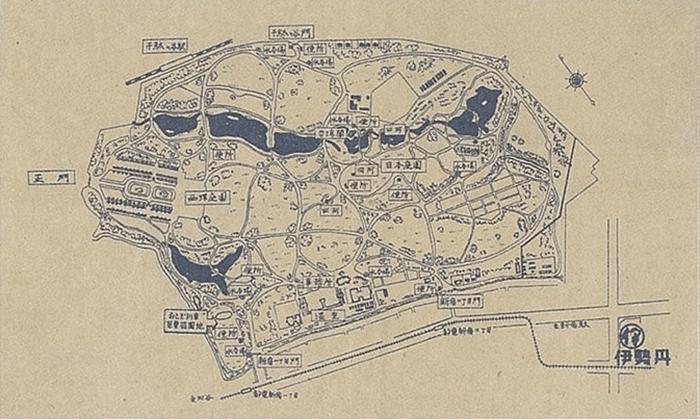
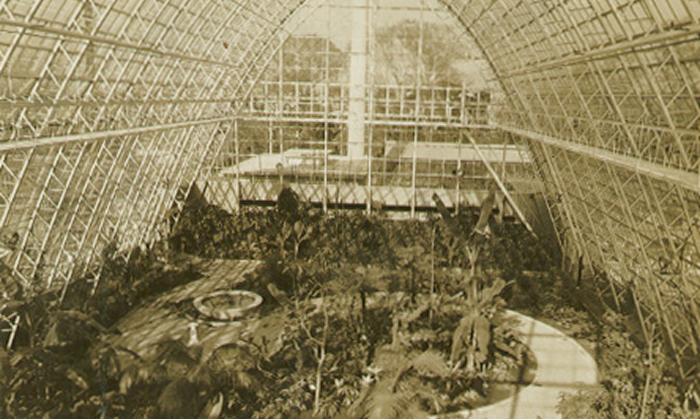
Shinjuku Gyoen opened as a national garden on May 21, 1949, coming under the control of the Ministry of Health and Welfare in 1950. Following the establishment of the Environmental Agency in 1971, control of the garden and national parks and related facilities all across Japan was transferred to the Agency. Then, with the reorganization of ministries and agencies that took place in 2001, control was transferred to the newly created Ministry of the Environment. In 2006, the garden marked 100 years since being named Shinjuku Gyoen, which brings us to the present day. When the garden was first opened to the public, the admission fee was 20 yen. In its first 10 months, it attracted 1.05 million visitors. In 1949, the chrysanthemum flower beds were reinstated following a break during the wartime years, with members of the public finally able to view the chrysanthemum displays, a tradition dating back to the Imperial Garden era, for the first time. The greenhouse was rebuilt in 1958, making it the largest in Asia at the time. Its latest iteration, completed in 2012, not only displays rare and unusual plants for visitors to enjoy, but also serves as a leading ecological research facility committed to the preservation of botanical diversity. Visitors to the garden can see a wide variety of flowers year-round, and the rich environment is a habitat for wildlife such as insects and birds.
Beloved by Tokyoites and visitors alike, Shinjuku Gyoen National Garden today is an oasis of nature in the heart of the metropolis. Whether one chooses to dive into the vibrant subtropics at the greenhouse, stroll under the majestic Himalayan cedars and bald cypresses, admire the flowers, or have a little fun spotting wildlife, the visit is sure to be utterly restorative.
Timeline
- 1590
- Naito family granted 70 hectares (173 acres) of land by the Tokugawa shogunate.
- 1872
- Naito Shinjuku Experimental Station established on the grounds of the former Naito estate.
- 1875
- First greenhouse built.
- 1879
- Renamed the Imperial Botanical Garden, under the jurisdiction of the Ministry of the Imperial Household.
- 1892
- New Western-style greenhouse facilities with heating and temperature control constructed.
- 1896
- Gokyu-Sho (Imperial Rest House) completed.
- 1900
- Fukuba Hayato commissions Henri Martinet to remodel the garden designs.
- 1906
- New garden, the basis of the present-day design, completed and renamed the Shinjuku Gyoen National Garden.
- 1917
- First “Kan’o-kai,” cherry-blossom viewing event held by the imperial family.
- 1927
- Kyu-Goryo-Tei completed.
- 1929
- Imperial family’s chrysanthemum exhibition held at Shinjuku Gyoen for the first time.
- 1945
- World War II firebombings destroy much of the garden.
- 1949
- Shinjuku Gyoen opens to the public as a national garden.
- 1958
- Largest greenhouse in Asia constructed.
- 1985
- Mother and Child Woods established for nature education.
- 1989
- State funeral rites for Emperor Showa conducted.
- 2001
- Kyu-Gokyu-Sho (Old Imperial Rest House) designated an Important Cultural Property.
- 2012
- All-new eco-friendly greenhouse opens.
- 2022
- Shinjuku Gyoen Museum opens.
- 2024
- Shinjuku Gyoen Coworking Space opens for business.